City of Pico Rivera's Climate Action and Adaptation Plan Dashboard
Transportation & Land Use
Deep Dive into Transportation & Land Use
Our community produces GHG emissions from driving vehicles, such as cars and trucks, and operating off-road equipment and vehicles, such as those used in construction and recreation. These emissions are produced by the combustion of gasoline and other fuels used to power cars and equipment.
In 2021, transportation was responsible for 52% of total emissions in Pico Rivera. By driving less, driving cleaner vehicles, and planning sustainably, Pico Rivera can reduce transportation emissions while reducing traffic and air pollution.
The City aims to reduce greenhouse gas emissions from transportation and improve community mobility through sustainable land use planning, accessible multimodal transportation options, improved cycling and pedestrian networks, and expanded electric vehicle infrastructure.
The graph below shows Pico Rivera’s greenhouse gas emissions by sector over time. You are currently looking at the page for the Transportation & Land Use sector, which is highlighted below.
Greenhouse Gas Emissions in Pico Rivera
Specifically, the City has committed to:
Strategy 1. Promote multimodal transportation system
| Action ID | Action Name | Brief Action Description |
|---|---|---|
| TL 1.1 | Commute Trip Reduction program | Promote resources for Commute Trip Reduction (CTR) |
| TL 1.2 | Active transportation access and safety | Support and plan for active transportation (e.g., walking and biking), in alignment with existing plans and programs |
| TL 1.3 | Micromobility services | Expand micromobility services in the City (e.g., e-scooter, e-bike, and associated charging infrastructure) and encourage safe bicycling and micromobility user behavior |
| TL 1.4 | Regional transit network advocacy | Advocate to improve the frequency of service, connectivity of routes, and safety of the regional public transportation system |
Strategy 2. Increase EV infrastructure and adoption
| Action ID | Action Name | Brief Action Description |
|---|---|---|
| TL 2.1 | EV Infrastructure Plan | Create an EV Infrastructure Plan |
| TL 2.2 | EV Readiness Ordinance | Analyze and propose new zoning and building code requirements for EV charging infrastructure and readiness |
| TL 2.3 | EV Education and Outreach | Develop and implement an outreach campaign focused on EV adoption and use |
Strategy 3. Promote sustainable land use planning
| Action ID | Action Name | Brief Action Description |
|---|---|---|
| TL 3.1 | Mixed-use, transit-oriented development | Promote development standards that increase residential density and integrate affordable housing, in alignment with existing plans and policies |
| TL 3.2 | Anti-displacement strategies | Identify resident, tenant, and small business protection measures to reduce the risk of community displacement |
| TL 3.3 | Environmental justice criteria | Integrate criteria and priorities of environmental justice into zoning, land use planning, permitting policies, and City projects |
Strategy 4. Decarbonize freight and aviation sectors
| Action ID | Action Name | Brief Action Description |
|---|---|---|
| TL 4.1 | Aviation and freight decarbonization | Advocate for and engage in decarbonization of the regional aviation, freight, and rail sectors |
what the city is doing
Mixed-use, transit-oriented development 


Leaf icons indicate emissions reduction and resilience impact (more leaves = greater potential impact).
Action: Promote development standards that increase residential density and integrate affordable housing, in alignment with existing plans and policies.
Transit-oriented development refers to walkable and dense mixed-use (commercial, residential, entertainment) development near public transit stations.
Allowing more homes to be built near jobs, services, and transit makes it easier for people to drive less, lowers GHG emissions, and helps address housing affordability at the same time.
The Pico Rivera General Plan, LA Metro’s Transit Oriented Communities Policy, and the state’s Transit-Oriented Development Program already have guidelines to promote higher densities and mixed-use development.
Timeline: Medium-term
Progress: The City will review the General Plan and consider new updates to increase density and determine areas to focus mixed-use, transit-oriented development.
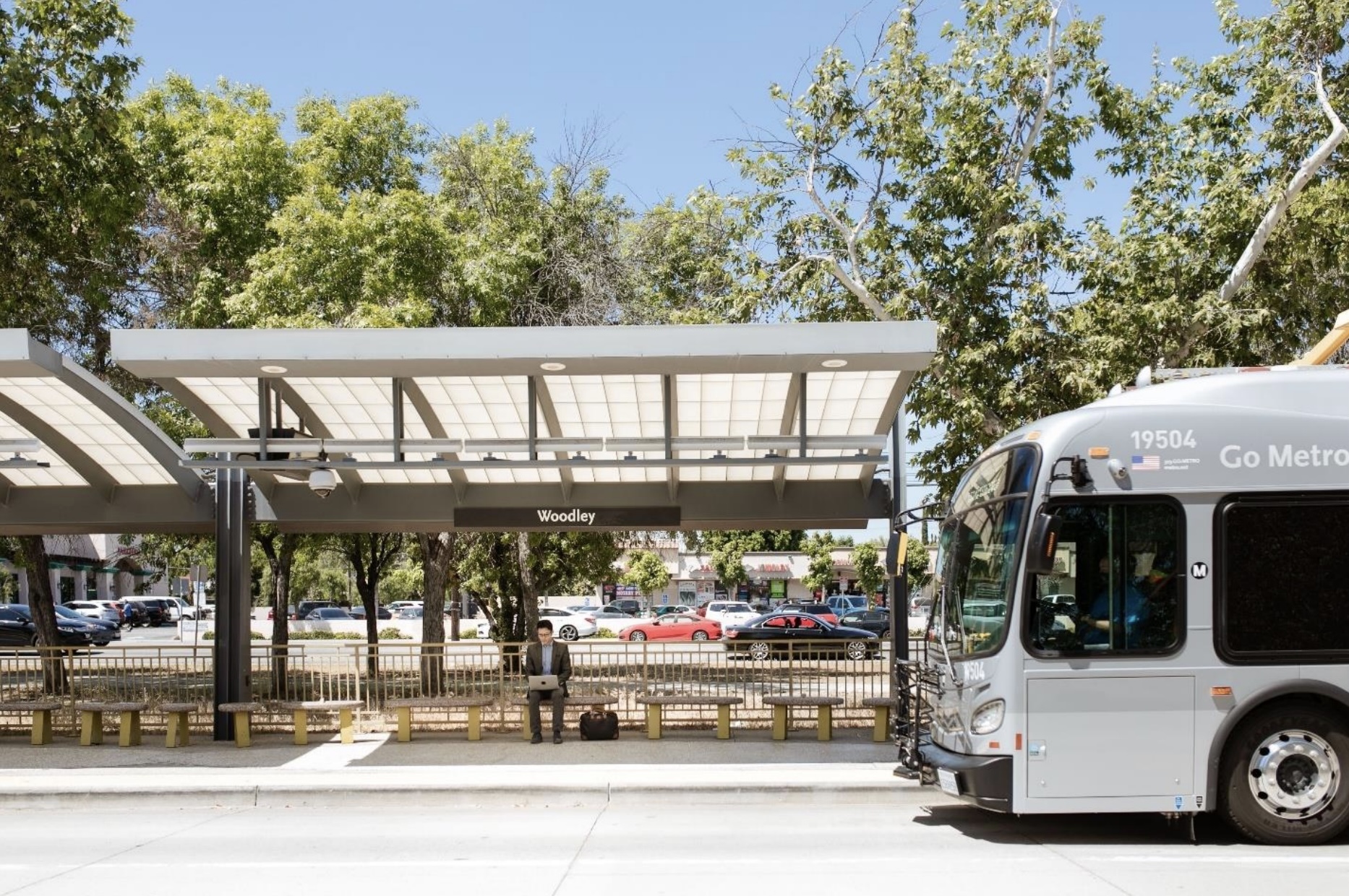
Image shows LA Metro bus terminal in a neighboring city. Planning mixed-use development around transit zones like this is one of the ways the City can decrease GHG emissions and traffic in the Pico Rivera community.
Commute Trip Reduction program 


Leaf icons indicate emissions reduction and resilience impact (more leaves = greater potential impact).
Action: Promote resources for Commute Trip Reduction (CTR).
Commute Trip Reduction programs share resources to help employers provide transportation choices to their employees, such as bicycle parking facilities and showers, transit passes, and remote work opportunities. Fewer solo car trips reduce traffic, air pollution, and climate emissions.
Timeline: Near-term
Progress: The City has not yet begun to implement this action.
Image depicts coordinated organization-level carpooling efforts. Programs like these can help reduce emissions produced as a byproduct of commutes to the office.
Active transportation access and safety 


Leaf icons indicate emissions reduction and resilience impact (more leaves = greater potential impact).
Action: Support and plan for active transportation (e.g., walking and biking), in alignment with existing plans and programs.
Improving walking and biking networks makes it safer and easier for people of all ages and abilities to get around without a car. Filling gaps in sidewalks, bike routes, and crossings supports healthier travel and reduces GHG emissions.
The City will identify gaps and challenges in the active transportation network to make walking and biking more accessible, safe, and connected throughout the city, especially for vulnerable road users such as people with disabilities, seniors, youth, pedestrians, cyclists.
There are several active plans and resources that the City can leverage: the Gateway Cities Council of Governments (GCCOG) Strategic Transportation Plan (STP) Active Transportation Element, Pico Rivera’s VMT Transportation Study, the City’s Urban Greening Plan, and the results of the City’s Climate Vulnerability Assessment and Hazard Mitigation Plan.
Timeline: Near-term
Progress: The City is planning several projects to install sidewalks and bike lanes. The charts below compare the miles of bike lanes and miles of sidewalks installed by project from 2019-2024.
Miles of bike lanes installed by project (2019–2024)
Miles of sidewalks installed by project (2019–2024)
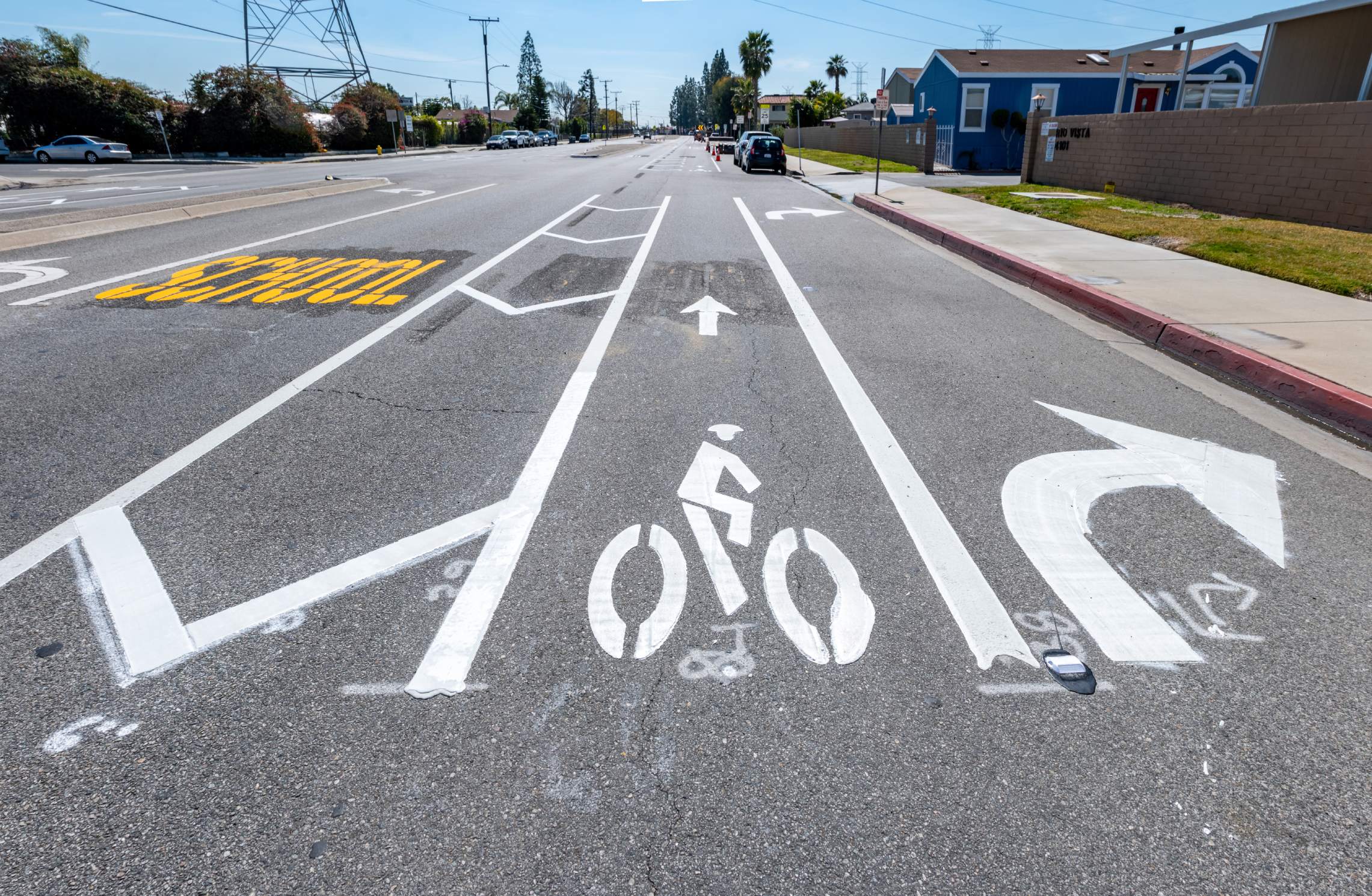
Image highlights new bike lane added to the Pico Rivera community. Amenities like this make bike travel safer and more accessible.
Micromobility services 


Leaf icons indicate emissions reduction and resilience impact (more leaves = greater potential impact).
Action: Expand micromobility services in the city (e.g., e-scooter, e-bike, and associated charging infrastructure) and encourage safe bicycling and micromobility user behavior.
Expanding access to e-bikes and e-scooters gives residents more affordable, lowcarbon travel options for short trips. Safe infrastructure and thoughtful charger placement help ensure these services are reliable and easy to use.
Timeline: Ongoing
Progress: The City has not yet begun to implement this action.
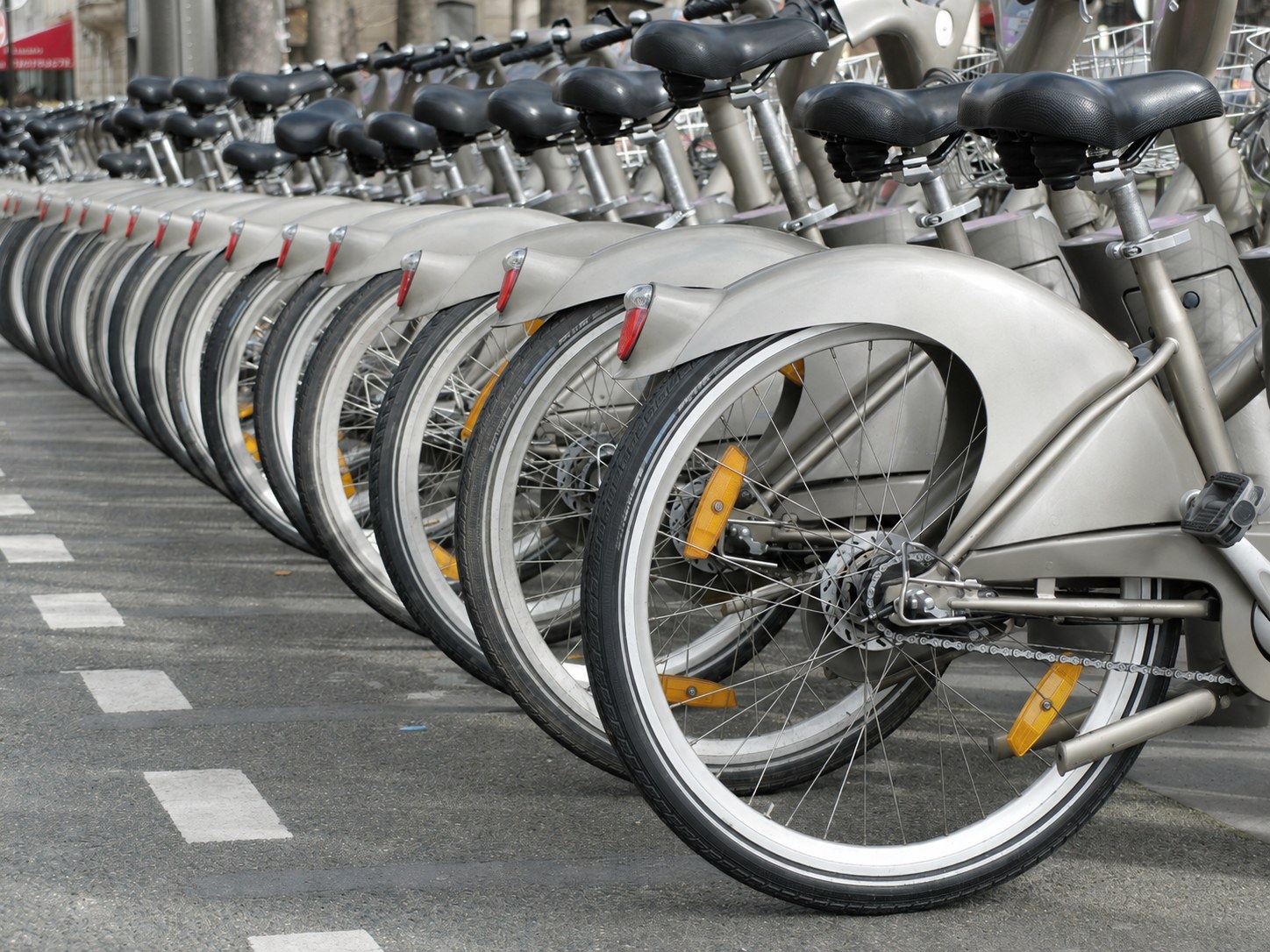
Image shows bike rentals; amenities like this are common in cities and provide zero emission transit options for residents and outside visitors.
Regional transit network advocacy 


Leaf icons indicate emissions reduction and resilience impact (more leaves = greater potential impact).
Action: Advocate to improve the frequency of service, connectivity of routes, and safety of the regional public transportation system.
More frequent, connected, and reliable transit helps residents depend less on driving alone. Improving safety, accessibility, and climate resilience ensures transit works for seniors, people with disabilities, and communities with limited options.
The City will:
- Ensure new transit locations are not in areas prone to flooding, and enhance the resilience of existing transit systems’ resilience to climate impacts.
- Increase transit accessibility in communities currently lacking transit options, and enhance connectivity to services and opportunities for seniors, individuals with disabilities, and low-income residents.
- Continue to explore the potential to accommodate Metrolink, Amtrak, highspeed rail, and intermodal bus terminals in the city, and educate residents on the benefits of reducing highway traffic and emissions.
Timeline: Ongoing
Progress: The City has not yet begun to implement this action.
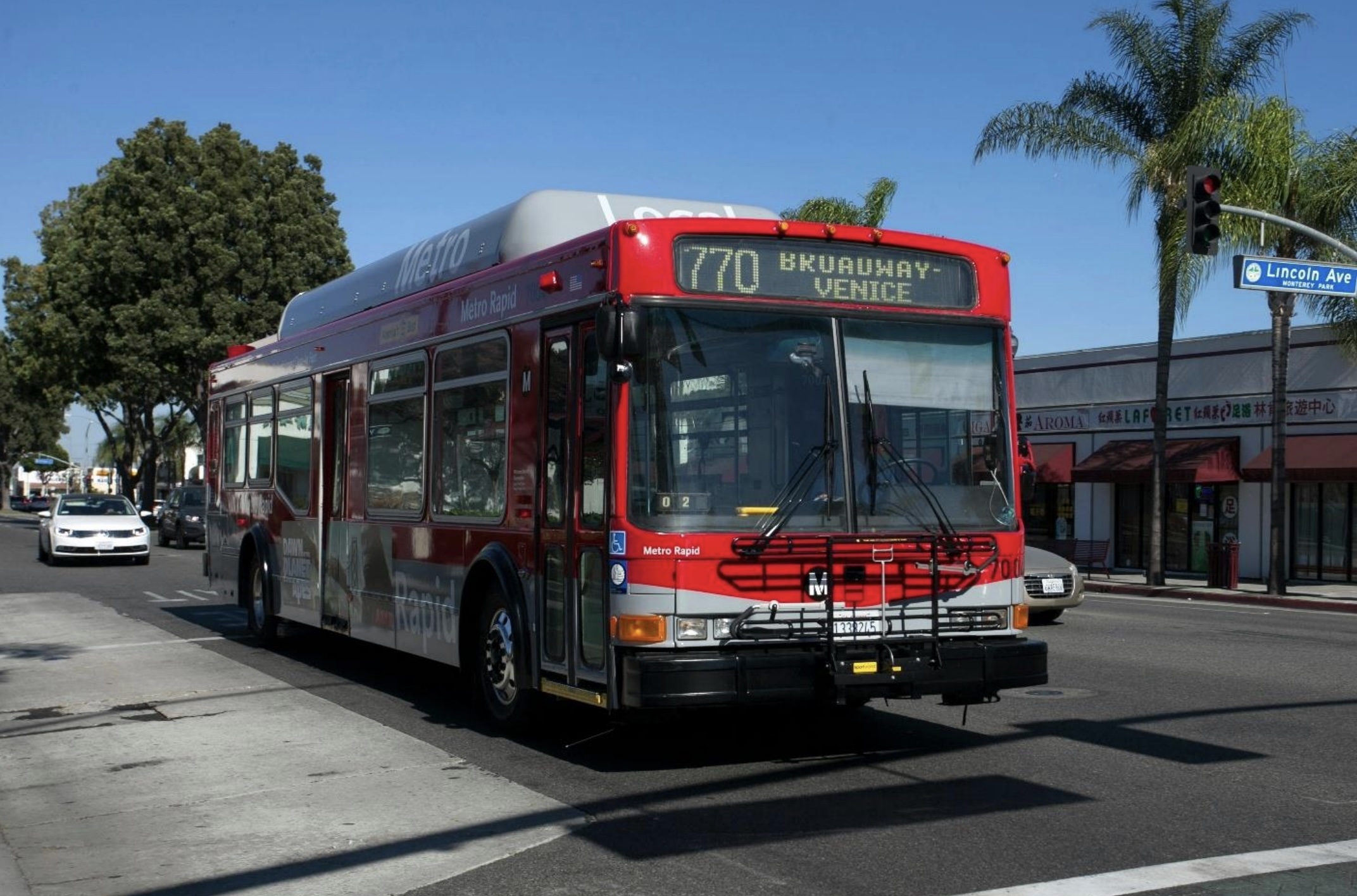
Image depicts a Metro bus in a nearby LA city. Making accommodations for more bus routes and other public transportation opportunities is one of the best ways to lower local emissions.
EV Education and Outreach 


Leaf icons indicate emissions reduction and resilience impact (more leaves = greater potential impact).
Action: Develop and implement an outreach campaign focused on EV adoption and use.
Many people are interested in EVs but are unsure how they work or how to get started. Providing clear, trusted information about EVs helps residents understand their options, overcome common concerns, and get the most out of existing charging, incentives, and programs.
Timeline: Near-term
Progress: The City is starting this action item by ensuring that staff with vehicle needs are exposed to the capacity of EVs for work-related duties. This effort is a priority in the City’s ongoing development of the EV Fleet and Infrastructure Master Plan.
Image shows an EV plugged into a charging port. The City plans on providing more educational resources to residents regarding best practices for purchasing and maintaining their EVs.
Electric Vehicle Infrastructure Plan 


Leaf icons indicate emissions reduction and resilience impact (more leaves = greater potential impact).
Action: Create an Electric Vehicle (EV) Infrastructure Plan.
As the local electricity supply shifts toward renewable energy, EVs will become an even better option to quickly reduce GHG emissions from driving.
A clear plan will help place chargers equitably, safely, and in locations that support homes, schools, and workplaces.
The City will identify barriers and develop strategies for EV readiness, including in public spaces, schools, businesses, multi-family homes, and underserved areas.
Timeline: Ongoing
Progress: In 2025, the City completed a request for proposal (RFP) for the Electric Vehicle and Infrastructure Master Plan. Out of all the eligible consultants that bid to assist the City with this plan, ICF Consulting resulted in the most qualified and cost-effective choice. The master plan’s project schedule concludes this plan by the end of 2027.
In 2025, the City also completed a study with SCAG called the Southern California Electric Vehicle Charging Station Study. The chart below shows the number of permits issued in Pico Rivera each year and completed each year from 2022-2025 across residential and commercial sites.
Pico Rivera EV Charger Permits
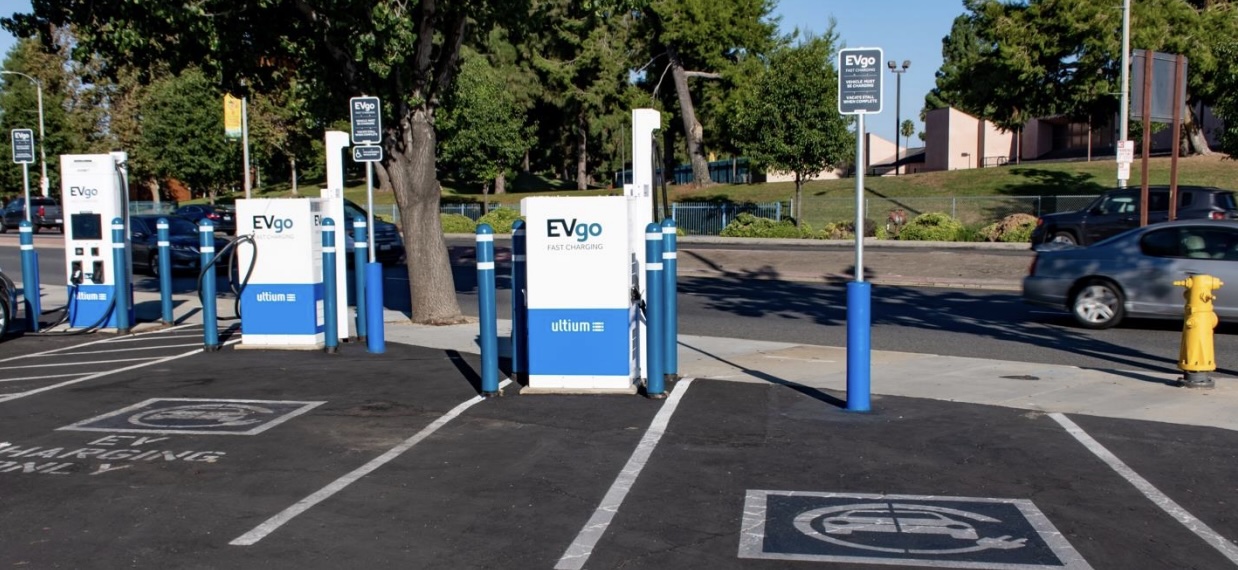
Image above highlights EV chargers in one of the City’s plazas. The City intends on developing a plan to strategically place EV charging stations in areas that will best serve the community.
EV Readiness Ordinance 


Leaf icons indicate emissions reduction and resilience impact (more leaves = greater potential impact).
Action: Analyze and propose new zoning and building code requirements for EV charging infrastructure and readiness.
Charging access is a known barrier to EV adoption, especially for apartment and condo residents, renters, employees at workplaces, and small businesses.
Updating zoning and building codes ensures new homes and businesses are ready for electric vehicle charging from the start. This reduces future costs and expands EV access, especially for renters and affordable housing residents.
Timeline: Near-term
Progress: The City has not yet begun to implement this action.
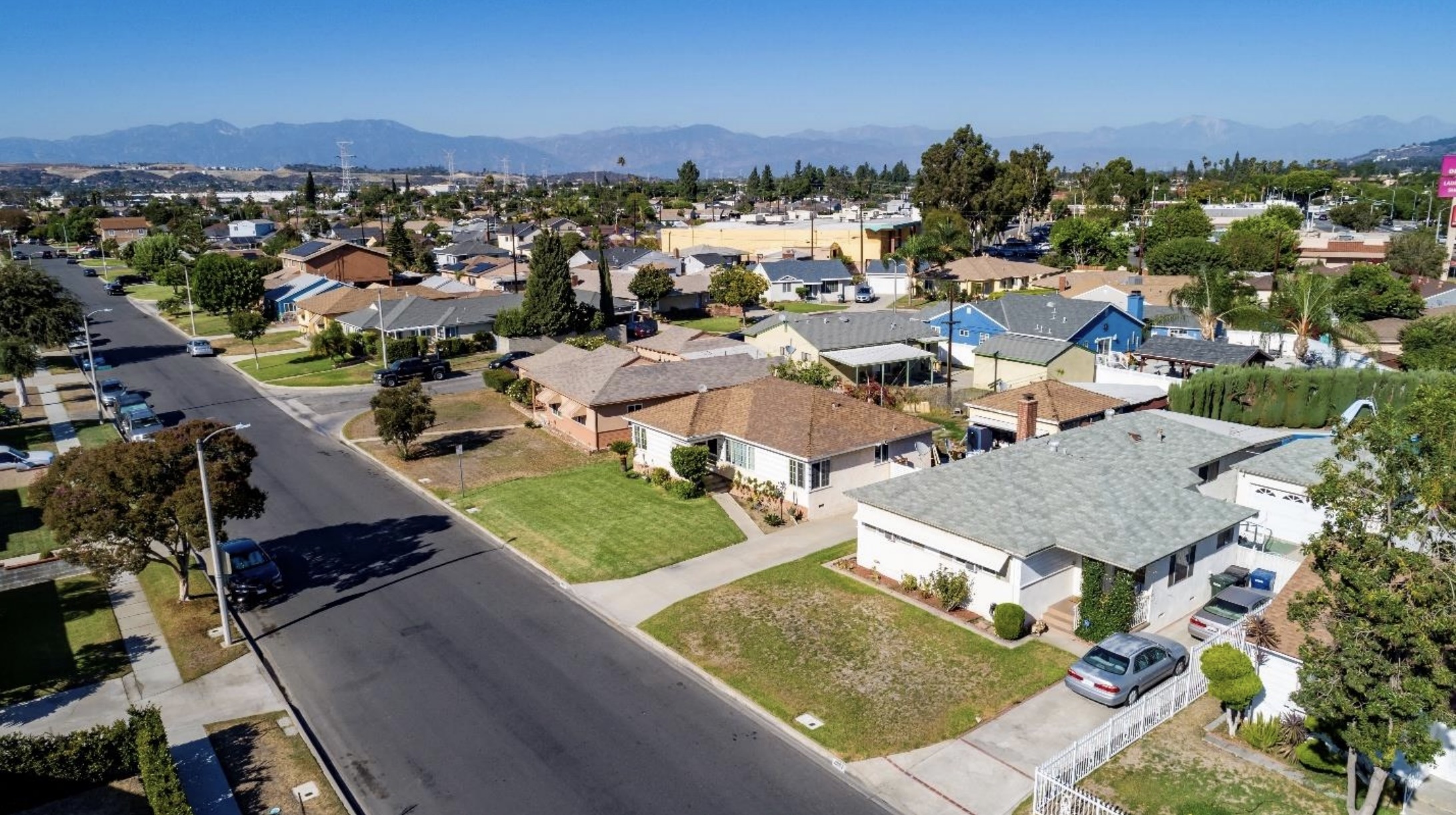
Image above depicts a single-family neighborhood in the City; future zoning and building codes will need to ensure the community like this is ready for more electrical vehicles.
Anti-displacement strategies 


Leaf icons indicate emissions reduction and resilience impact (more leaves = greater potential impact).
Action: Identify resident, tenant, and small business protection measures to reduce the risk of community displacement.
Protecting residents, renters, and small businesses helps ensure that climate investments improve neighborhoods without forcing people out. These measures help communities benefit from cleaner, healthier places while maintaining affordability and stability.
Some examples of protection measures are rent control policies, eviction protections, technical assistance, and affordable housing requirements.
Timeline: Medium-term
Progress: Currently, the City is prioritizing transit access.
Image portrays a small business owner. If the City prioritizes local policies that prioritize the local workforce and entrepreneurs, business owners will be primed to thrive in the City.
Environmental justice criteria 


Leaf icons indicate emissions reduction and resilience impact (more leaves = greater potential impact).
Action: Integrate criteria and priorities of environmental justice into zoning, land use planning, permitting policies, and City Projects.
Embedding environmental justice into City decisions helps reduce pollution and harms to health in communities that are most affected by climate change. It ensures that the benefits of climate action are shared across all neighborhoods.
Timeline: Ongoing
Progress: The City is already incorporating environmental justice into zoning standards and is considering adding an Environmental Justice Element to the General Plan.
Aviation and freight decarbonization 


Leaf icons indicate emissions reduction and resilience impact (more leaves = greater potential impact).
Action: Advocate for and engage in decarbonization of the regional aviation, freight, and rail sectors.
Reducing GHG emissions from planes, freight, and rail improves air quality and ecosystem health. Local advocacy helps achieve cleaner transportation options that benefit public health and the regional economy.
Timeline: Long-term
Progress: The City will consider how to best leverage grants and incentives from the California Air Resources Board, the South Coast Air Quality Management District, and others.
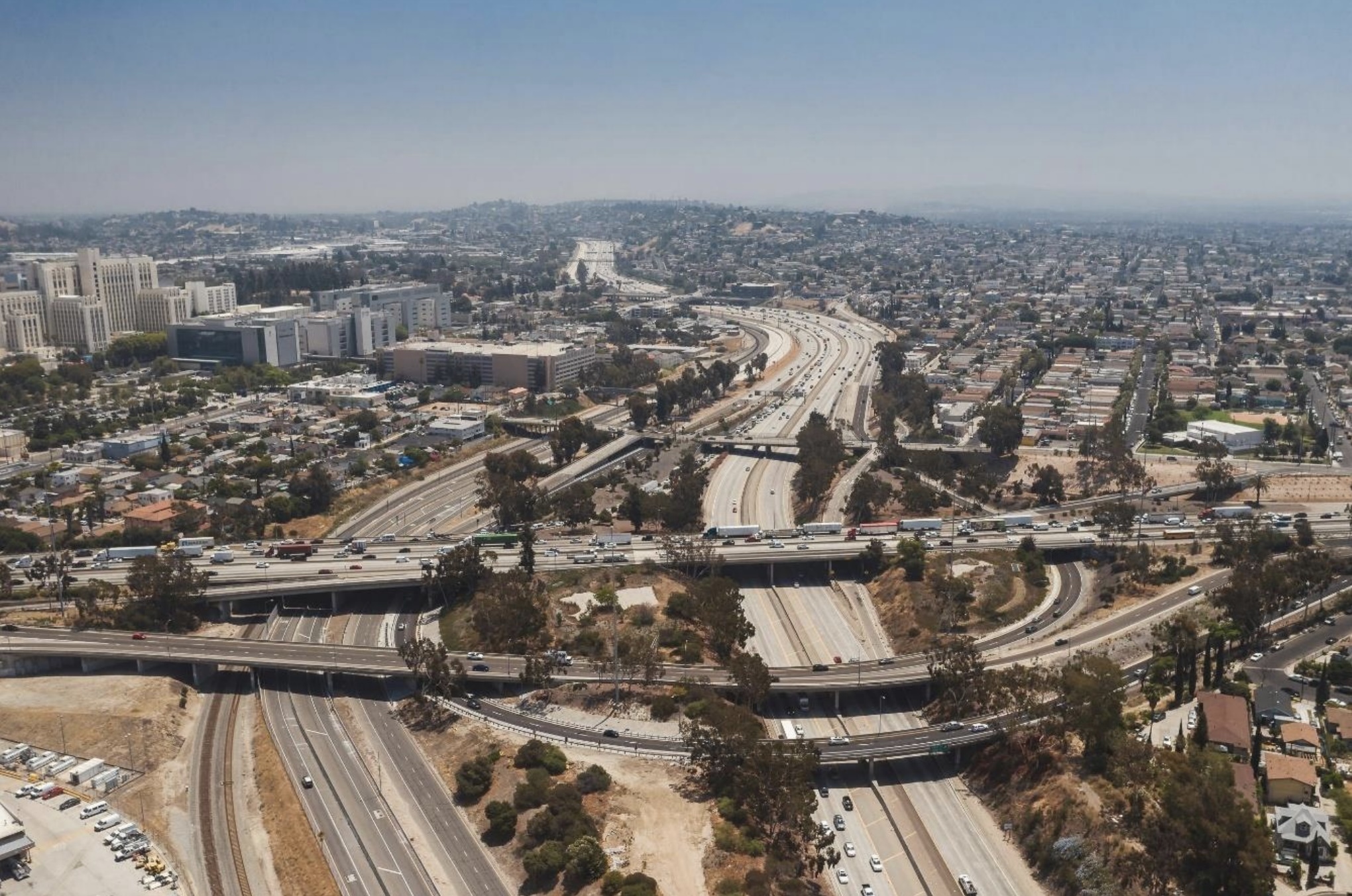
Image shows aerial view of the highway system in the LA area. The City of Pico Rivera is surrounded by 4 major highways and therefore must coordinate and support advocacy efforts around mitigating emissions from these sources.
what can you do
Embrace public transit and alternative travel options
Ride Pico Rivera’s buses and regional transit options.
Carpool with others sharing your route.
Bike and walk where you can.
Check options for using e-bikes and e-scooters.
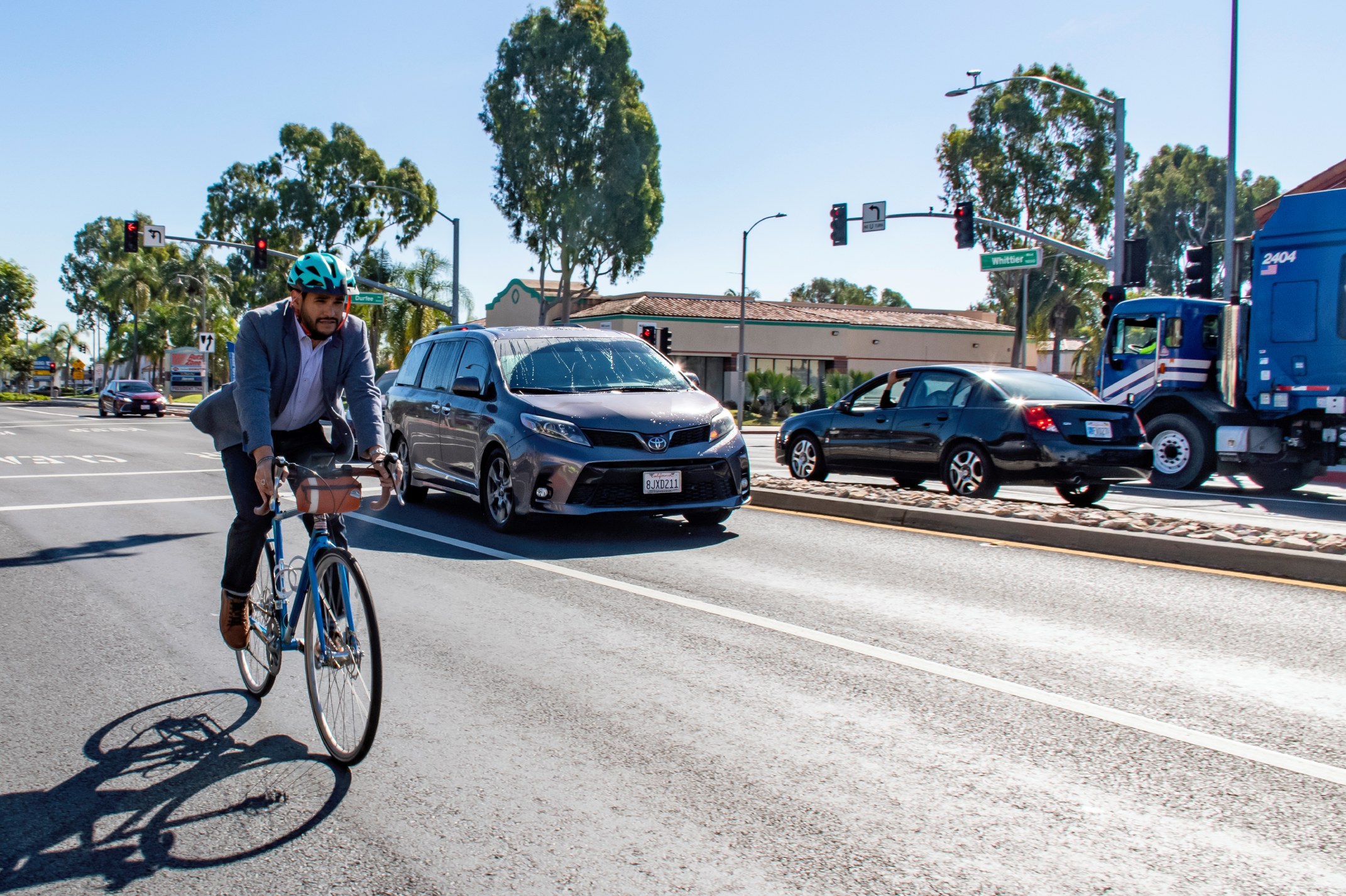
Image highlights a cyclist biking in the City along Whittier Blvd. Future plans for this historic street hope to incorporate more lanes for bike and bus transit use.
Reduce your reliance on your gasoline-powered vehicle
Reduce vehicle idling as much as possible.
Switch to an electric or hybrid vehicle.
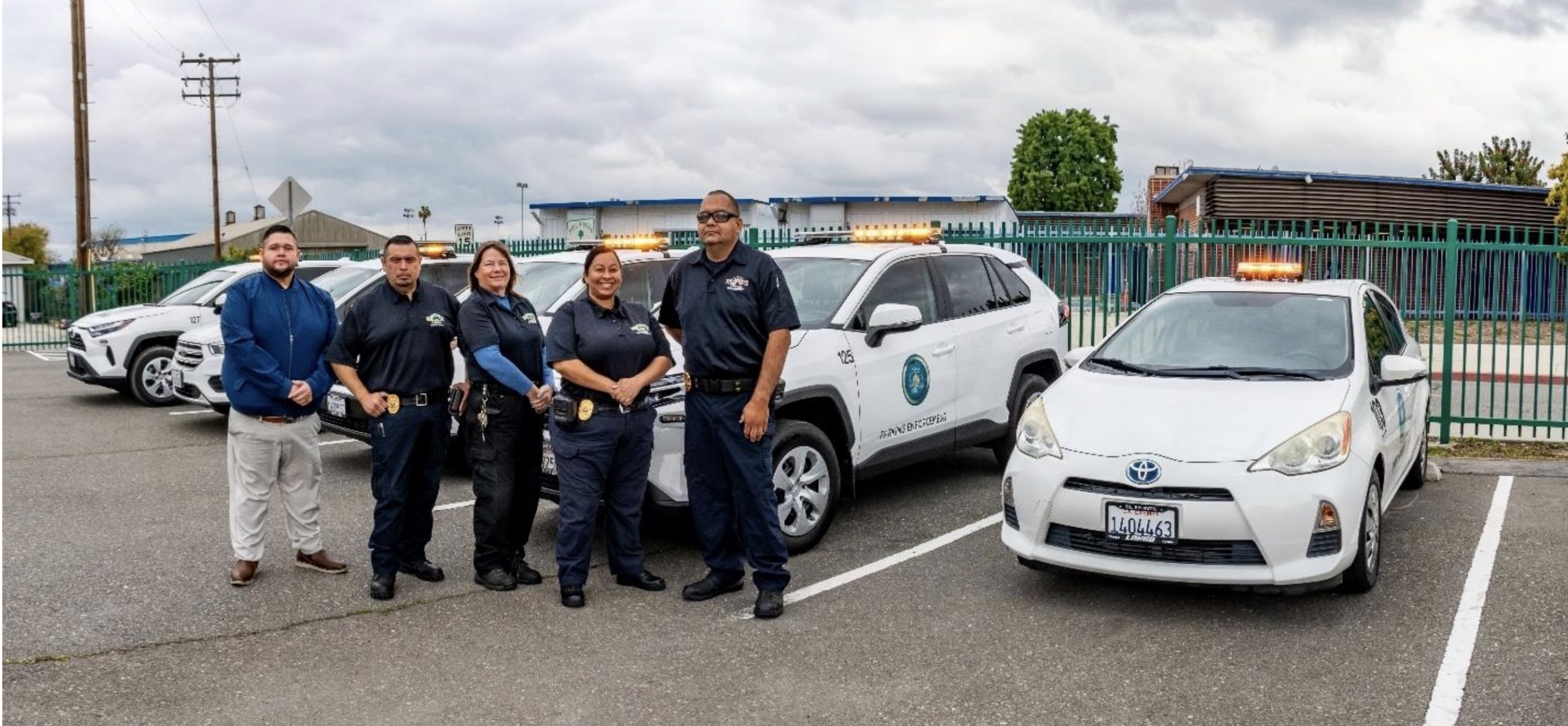
Image highlights the City’s parking enforcement team’s fleet that is composed mainly of hybrid and electric vehicles.
Advocate for fossil-free transit
Call your state and federal representatives and ask for train expansion.
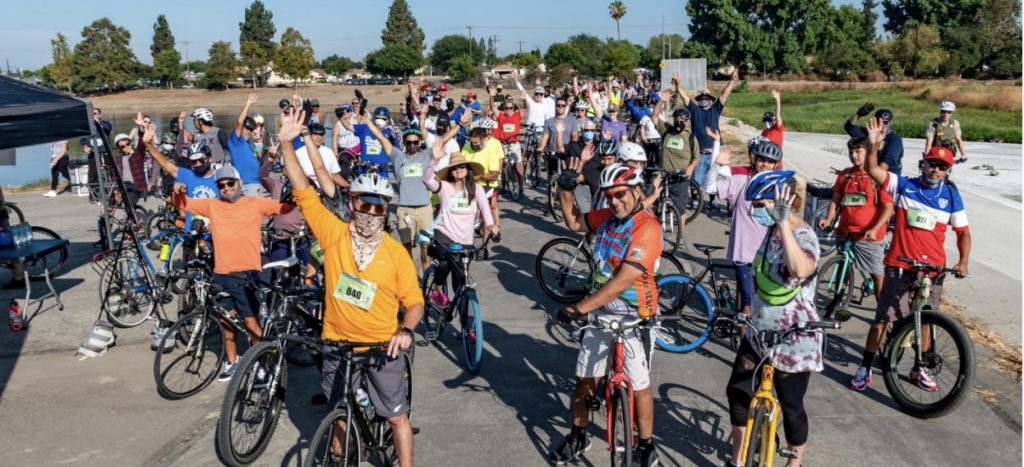
Image depicts local active transportation advocates at a City coordinated biking event.
Español
English
العربية
Հայերեն
ភាសាខ្មែរ
简体中文
فارسی
Deutsch
日本語
한국어
Русский
Filipino
ไทย
Tiếng Việt